Users and operational context
Purchasing Academy is a working hotel-procurement learning platform with two connected academies, practical workspaces, evidence-based progress, and a temporary cloud-backed learner session.
Hotel Procurement Learning Platform · 2026
A full-stack training platform for hotel Purchasing, combining structured learning, procurement documents, practical exercises, scenario decisions, progress evidence, and a separately sourced CHECK SCM readiness academy.
Product case study
Verified implementation screens, architecture, content boundaries, session behavior, and release evidence from the working product.
Purchasing Academy is a working hotel-procurement learning platform with two connected academies, practical workspaces, evidence-based progress, and a temporary cloud-backed learner session.
People moving into hotel Purchasing need to understand terminology, approvals, documents, supplier decisions, department handoffs, compliance, cost control, and enterprise-system logic before they can contribute confidently.
Build a structured working environment where learners study the domain, inspect fictional procurement records, complete practical exercises, make decisions in realistic scenarios, receive feedback, and build an evidence-based readiness profile.
The released application connects procurement-domain research, learning design, interactive practice, privacy-aware temporary persistence, content validation, automated testing, and responsive deployment in one product.
Two connected academies
Purchasing Academy is a working hotel-procurement learning platform, not a static course. Learners study the domain, inspect fictional records, complete practical exercises, make scenario decisions, and build a readiness profile from evidence they create.
Learning loop
Product architecture
The content registry connects academies, modules, lessons, glossary terms, scenarios, documents, assessments, and exercises. Zod validation rejects broken relationships, duplicate IDs, missing explanations, and invalid confidence labels before release.
Core product areas
Applied workspace
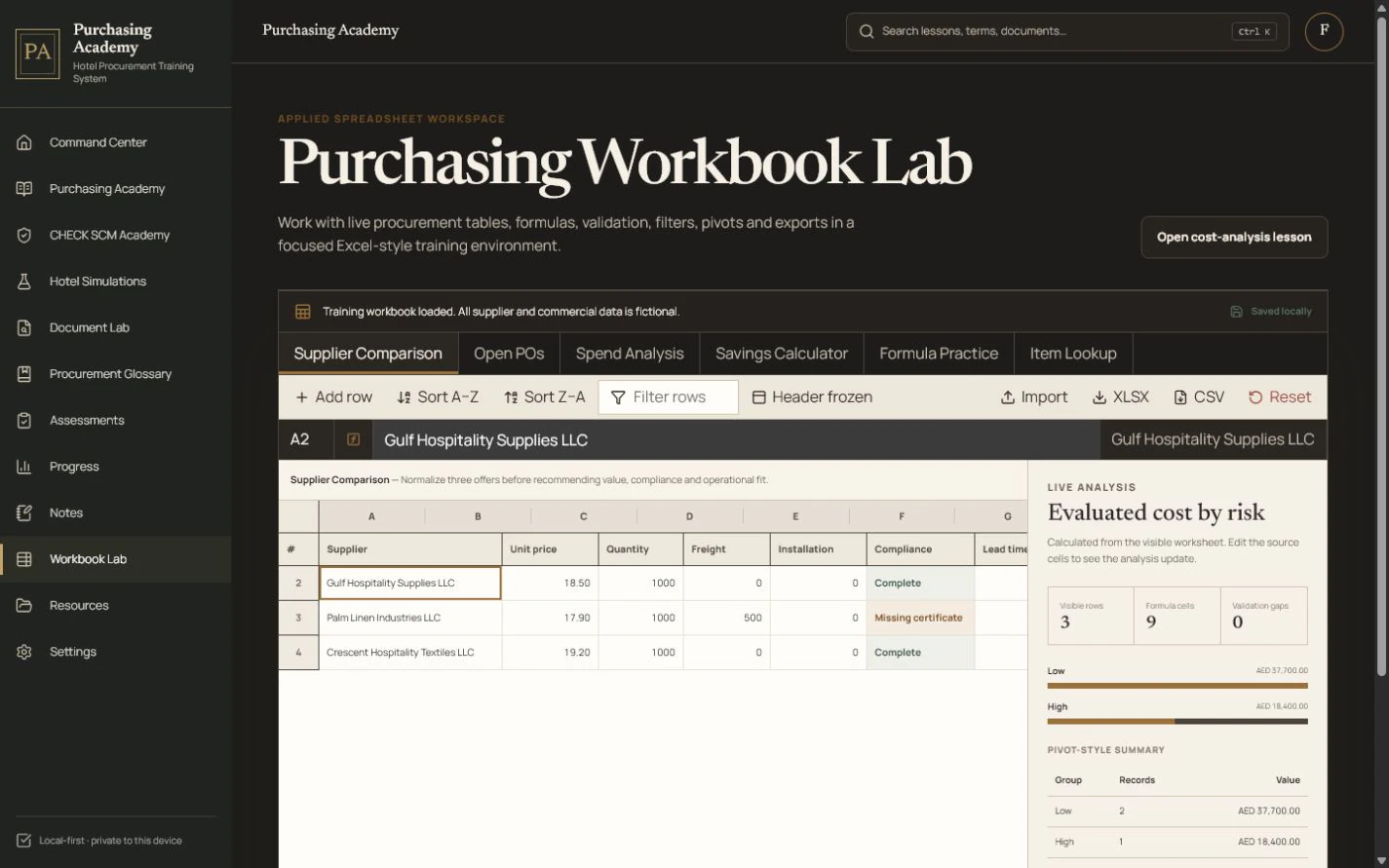
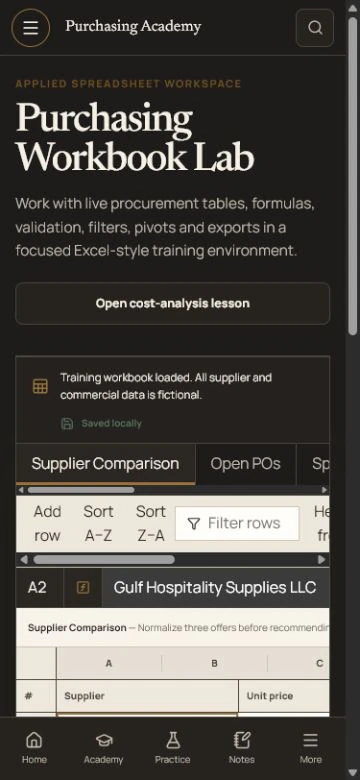
Six editable sheets support formulas, cross-sheet references, sorting, filtering, validation, summaries, charts, and XLSX/CSV import and export. The grid stays contained on mobile.
Six interaction modes cover evidence review, ordered actions, written responses, calculations, document checks, and branching choices. Scoring is deterministic, resumable, and explained.
Semantic writing review uses a local procurement ontology, contextual matching, contradiction checks, weighted rubrics, and safety caps. It is not presented as a perfect AI evaluator.
Temporary learner sessions
Visitors enter a full name to start a temporary session. Learner greetings, saved settings, recommendations, and PDF summaries use only the first name. The full entered name appears only in the owner's aggregate learner summary.
This is not password authentication or permanent account identity. Logging out removes the active KV record and local learner cache.
CHECK SCM evidence boundary
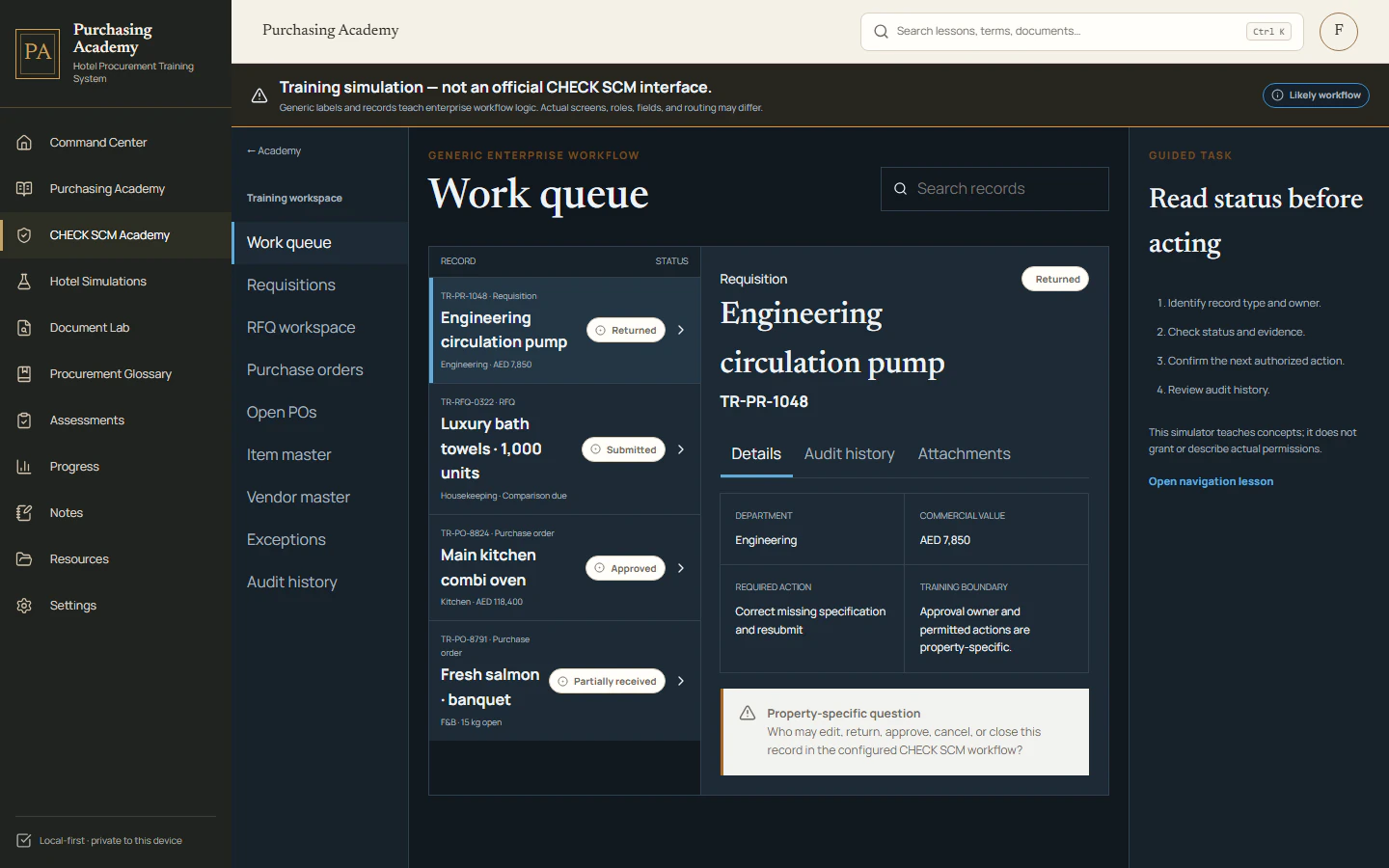
The academy separates official public product context, generic enterprise workflow, property-specific configuration, and items that must be confirmed during rollout. Exact menus, labels, permissions, approval routes, integrations, and hotel configuration are never claimed as verified.
Release evidence